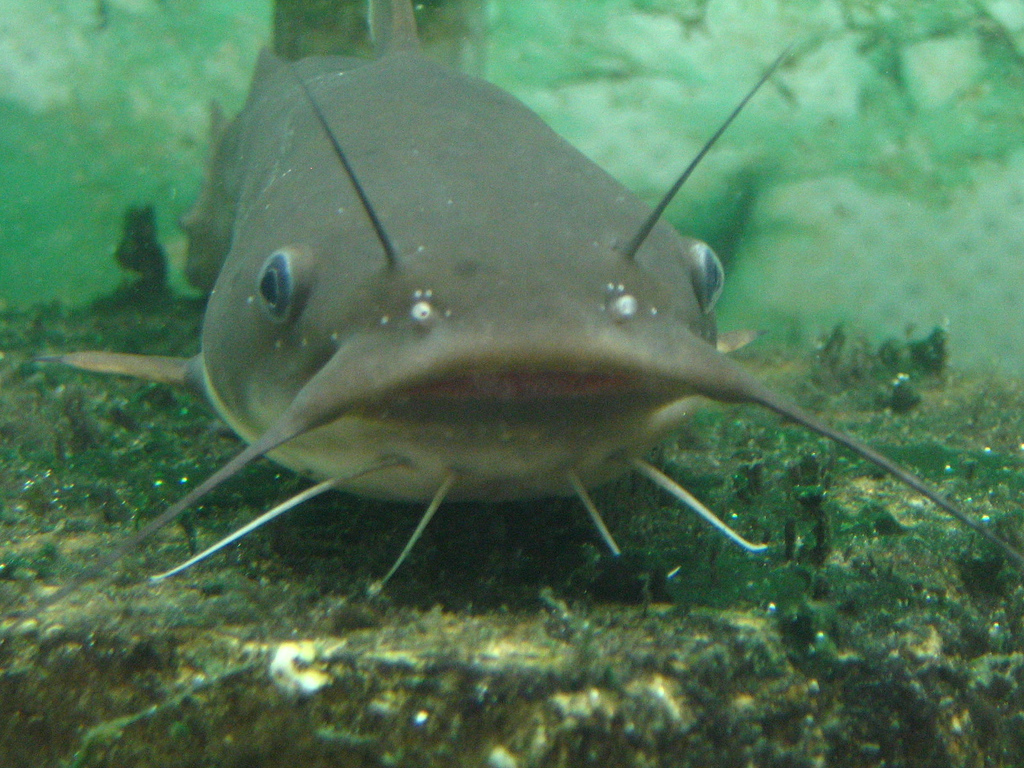
"They used to tank cod from Alaska all the way to China. They'd keep them in vats in the ship. By the time the codfish reached China, the flesh was mush and tasteless. So this guy came up with the idea that if you put these cods in these big vats, put some catfish in with them and the catfish will keep the cod agile. And there are those people who are catfish in life. And they keep you on you toes. They keep you guessing, they keep you thinking, they keep you fresh. And I thank God for the catfish because we would be droll, boring and dull if we didn't have somebody nipping at our fin." -from Catfish (courtesy of Wikipedia)In its colloquial usage, a catfish is someone who pretends to be someone they are not using social media or the Internet. I don't think anyones willing to argue that these catfish don't exist. As the latter quote mentions, "catfish" keep us on our toes, forcing us to question the identities of others. We've seen hundreds of these agile bottom-dwellers, we just never had a clever word for them.
One of the biggest catfish out there is Lance Armstrong. As he battled testicular cancer, Armstrong crafted an image of strength, determination, and most of all, success. When he entered the professional cycling scene, he raised his antes by winning his first Tour de France title. Once Armstrong's miracle story entered the main stream, in his mind he created an identity of a winner, a winner at all costs. All along, Armstrong denied claims of doping because his "catfish" identity hid who he truly was. Ironically, Armstrong is still reluctant to admit to his lies, even after being stripped of all seven Tour de France titles. In some ways, a big lie is like cancer itself. No one really knows how to deal with it the first time. But once its on the move, it destroys everything in its path. Often it isn't stopped until it's too late.
So yes kids, lying is bad. But it's out of our power to stop every single person on this Earth from lying. So what can we do? Well first, we need to understand what motivates these catfish to fabricate stories, and what better place to turn to than the Manti Te'O scandal. This shocking article entails the real Lennay Kukua's (Diane O'Meara) perspective on the scandal and how a stranger sucked her into elaborate lies embellished by social media. She was unknowingly "catfished," as I like to call it. Recently, Te'O admitted that after he found out his new girlfriend was imaginary, he kept the cancerous lie moving because he didn't really know what to do with it. The Notre Dame superstar thought he could continue living in his small pond of catfish. He claims that he didn't want to upset his dad, and he didn't want the media to think he was a liar or that he was clinically insane (so much for that).
But I think the real reason he kept living the lie transcends parental or societal disappointment. My guess is that Te'O, just like most of single America, spent unfathomable amounts of time on Facebook and Twitter hoping to find a connection, to find someone he could trust and share happiness with. I truly believe the right girl for Te'O is out there somewhere among the seven billion fish in the sea. But social media has the dangerous capability of giving us what we want, even if it's not really there. Te'O so desperately wanted love, that his idea of love thrived in the virtual world where he didn't have to physically face reality. Watch out, catfish are more real than you think.


