Saturday, May 11, 2013

Watch Your Step

It's been a long run, guys. I'm sad to say that this will be my last blog post since I will be heading off to college soon (and Google Reader is shutting down :/ ). Chances are, if you are reading this blog, you are an active user of social media and you communicate with others in some way, shape, or form. Hopefully you've gained something valuable from following all my blog, but I'd like to leave you all with 3 rules to guide your future as powerful leaders in the social media world.


Rule 1: If it's too good to be true, it's usually too good to be true

If you don't know what I'm talking about, you might want to reread my post on Manti Te-O for a bit of a refresher.
Most of us can tell apart the Chase Bank impostor asking for a social security number from the actual bank asking to verify previous transactions. Obviously, stay away from spam, scams, and the like, but what's more important is that you judge people on more than their profile picture or social media activity. As I will be attending Northwestern University in the fall, I've been actively looking for a roommate. After posting my bio on the roommate page, one kid messaged me who I thought seemed pretty cool. But I met up with him at a business competition in California and my initial impressions did not exactly hold true. However, recently I found a roommate who shared similar interests to me, but when we met up in person I knew he was a perfect fit. So lesson to be learned, it's better to doubt everything than accept everything as the truth.


Rule 2: Balance your real time and your fake time

At the risk of sounding cliche, I'm not going to preach how it's important to make time to see people face-to-face or read the newspaper. Some people read Reddit or Twitter like it's the Bible, as if some how the random disjointed posts or tweets somehow fill in all the hidden cracks in your knowledge that the NY Times could not. I'm a strong believer that the greatest things in life are our relationships with other people, and these virtual relationships simply don't cut it. Touch, smell, sight, emotions. These things help form memories of those important to us in our lives. While iPhone's FaceTime or Skype allows us to communicate, it is impossible to involve these other powerful senses.


Rule 3: Let the force be with you


As much as you should be cautious of social media and communication, my final point is definitely to remember that these tools can be agents of change. Internet has become the first communication method that allows groups of people to communicate with other groups of people. If you're passionate about an idea (see my blog on gay rights), make it known. Use the small sphere you've created in the social world to spread your ideas and ambitions. My dream is to one day start my own business, and I've been absolutely amazed at a website called Kickstarter which helps young minds with creative ideas receive funding to start a business. With high speed communication, ideas travel faster and farther. It seems foolish to let that go to waste.


Friday, May 10, 2013

What's On Your Plate?

Everyone has something that makes them irk, something they wish they could change which seems out of reach. For me, that is nutrition and healthy eating. Ironically, I was a chubby child for a lot of my life. In 8th grade I decided it was time to change. I started working out, eating healthier, and playing competitive tennis. And my freshman year of high school I joined the swim team. Today, when I look back I can say I'm proud of how far I've come, and I've promised myself I'll stay active and healthy as long as I can.

But what really irks me is that not everyone sees the value of healthy living. A huge hypocrisy exists in spending tons of money on junk food and then subsequently spending tons of money on fitness centers, therapy, and even bariatric surgery if needed. As part of a community service project, I wanted to make a small impact on the local community and try to set fellow high schoolers in the right direction.

I set up a meeting with the director of the local YMCA, and she directed me to a website called myplate.org. Most of us are used to the USDA's food pyramid from 2005 on the right. To make a point, the USDA added a staircase on the left hand side, implying that routine exercise is a crucial part of healthy living.

File:USDA MyPlate green.jpgIn 2011 USDA updated their food scheme once again, this time straying away from the notorious pyramid. The new food plate emphasizes portion sizes. Although Americans may feel as if they're getting a share of each of the different food groups, this often happens at the cost of overeating. Take a minute and take this fun Portion Distortion Quiz, it'll really open your eyes as to how much portions have changed in the last years.

My biggest concern is that after students leave middle school or high school, they no longer are required to take health classes. While they seem trivial at the time, I've talked to many adults who are currently struggling to lose weight, and they all say the same thing. They wish they were
more conscious of their diet at an early age.

Another thing I've noticed our eating habits are often a consequence of our environment. My school Glenbrook North tried implementing a healthy salad bar station in a side corner near the lunch room. After a year, they realized it was not very profitable, so now it works on a rotation with an ice cream stand. This brings up the classic controversy of prioritizing money before health. It's hard to justify paying the extra money to buy a mango instead of fruit snacks, because we simply can't see the effects of it for years to come.

Anyways, for my action project I set up a booth outside the cafeteria and sold bowls of pineapple and canteloupe for $1 each. In total, I raised $35, which I promised to donate to the Eat Right foundation. In addition, I gave out handouts with healthy eating tips that I reproduced from MyPlate.gov. I was surprised at how many people took an interest in it and took one of the flyers. Yet, my action project turned out to be a bit of a social experiment, as another club was selling Viccino's pizza right next to me. And they sold about $200 worth of pizza. From a purely economic standpoint, fundraising goes a lot better when you're selling baked goods or pizza, iconic American junk foods that makes kids' mouth water and compel them to drop a few dollars without even asking the name of the charity the money benefits.

Now I know many of you have seen movies like Super Size Me or Food Inc. But I'm not here to tell you that fast food is bad. My main point is to balance your vices and reward yourself. Don't sit in front of the TV or computer chowing down on Cheezits. Instead, if you worked out today, maybe reward yourself with a handful of chocolate dipped pretzels or what not. If you teach yourself to eat things in moderation, you'll learn to control your diet much better. I encourage you to set one goal for yourself for the next month. My goal last month was to drink soda not more than once a week. Once you start on the right path, each successive step becomes slightly easier. It's these small steps that promote, not immediate weight loss, but instead long term healthy living. Try it!


Monday, April 22, 2013

Finding Your Fit

Hey guys! I recently wrote a blog on the college selection process through the lens of motivation, which was posted onto my friend Shawn's blog. It's definitely worth a look! Follow the link below.

http://what-and-why-motivation.blogspot.com/2013/04/readers-you-have-witnessed-what-i-have.html

Monday, April 1, 2013

Paint the Town Red

If you've been keeping up with your social media this month, you may have noticed many of your friends' artsy profile pictures have been replaced by the mysterious pink equal sign splashed onto a deep red background. It turns out that this equal sign has become the new symbol for equality, promoted by the Human Rights Campaign. On March 26th the HRC had asked followers to paint the town red by wearing red clothing, however many Americans decided to raise awareness the best way they could: social media.

Although this issue of gay rights has been boiling for quite some time now, the Supreme Court is facing a momentous fork in the road, and people who have been holding in their beliefs have found a medium to mobilize their support. As the Supreme Court discusses California's Proposition 8 as well as the Defense of Marriage Act, a sea of red has poured over the internet and social media sites.

On Twitter, Supreme Court, better known as SCOTUS (Supreme Court of the United States) ranks top 10 in the world trending list. And of course, thousands of users on Facebook are changing their profile pictures to the pink equal sign above. But it's not just your average Joe promoting this symbol of equality. Celebrities, from Star Trek veteren George Takei to talk show host Ellen DeGeneres, have uploaded this image and shared personalized messages with the world, garnering thousands of likes, favorites, shares, and retweets. Beyonce played on the lyrics of one of her more famous songs "Single Ladies" by tweeting, "If you like it you should be able to put a ring on it #WeWillUniteForMarriageEquality."


The bottom line is that social media allows us all to express our beliefs in our own ways. Some of us have gay relatives or friends, some of us believe marriage is a universal human right, and some of us feel that men and women should decide for themselves who they love. I personally fall into all three categories. One of my favorite musical artists Macklemore produced a song called "Same Love." With gay uncles, he's been a strong supporter of equality under the law as well. If you have not heard this song, it's worth a listen.


More importantly, let your own voice be heard. If your actual voice cannot speak loud enough, use social media, and let your small impact on others carry a long way. While the final decision in these  influential court cases will ultimately rest with the Supreme Court justices, a shift in mass public opinion has the power of persuasion. I myself have been skeptical of the impact of social media at times, but after one of my swimming teammates and a beloved member of the Northbrook community took his own life today due to harassment because of his sexual orientation, I've realized that every little effort counts. #RIPAngelo


Monday, February 25, 2013

History is a Thing of the Past


These past few weeks my English class has been dissecting Shakespeare's Hamlet using a variety of critical lenses, such as feminism and Marxism. One lens in particular, known as new historicism, really changed the way I look at historical works. New historicism dictates the impossibility of objective analysis. New historicists claim that we can only truly know the most basic facts of history, and the rest is left to interpretation. History is a thing of the past, and when we try to make it a thing of the present we almost always twist it in someway or another.

Think about it. When we look back to World War II, most of us see a bunch of cold-hearted Nazis mass murdering millions of Jews. We think of America as the winner, as the savior, as the hero. But what if we had lost? Historically speaking (no pun intended), winners write history. If the axis powers had won, we would be reading a very different account of Hitler's Germany and the war in general. A new historicist's goal is to separate personal interpretation from historical accounts and literary pieces. This essentially breaks down into a simple fact: we must consider all works and events to be products of a certain time and culture. Now, why does this apply to us?


Let's take a real example. Last night the Oscars were on, and I noticed that many of the films nominated for best picture centered around a momentous historical event or figure. Argo, Zero Dark Thirty, Lincoln - these critically acclaimed movies communicate ideas that have been covered countless times. They're really nothing new. However, the reason they gained so much recognition and distinction is that the personal interpretations of the producers of the works were innovative and unique.

I myself saw Argo and was impressed at how Ben Affleck and his co-producers included so much factual information in the film while keeping it entertaining. Nevertheless, I always like to do my research, and so I went home after the movie and looked up a "truer" account of the rescue of U.S. diplomats during the 1979 Iran hostage crisis. This article rants about some of the misleading aspects of the movie. The biggest flaw is that the rescue actually went smoother than described due to major assistance from the Canadian government, which did not get nearly enough credit in the film. Sure, the movie did not claim to be 100% accurate. But a new historicist considers the motives of the author and the culture in which a work is produced in order to partially eliminate bias. Affleck is a producer (and an actor) who wants to sell his movie. So he naturally would add in obstacles that make the narrative of events more exciting. Also, in the 21st century us Americans don't like to think of ourselves as weak or dependent. Maybe that's why Affleck left out the support from the Canadians. What other works or historical accounts do you think need to be revisited from a new historicist lens?

Tuesday, February 12, 2013

Body Space for Sale

As decades pass, new technologies penetrate the mainstream and transform the way people communicate with one another. From morse code to the first telephone to e-mail to social media, it seems the biggest trend is that these innovative methods allow people to communicate larger volumes of information at quicker speeds. It's hard for me to hide my enthusiasm for Apple products, and so I'd like to share the next potentially revolutionizing technology, the iWatch.

While Apple has not hinted at any such product (Apple loves to remain secretive), substantial rumors are beginning to sprout. If such a device is created, its applications would be limitless. A relatively new watch developed by Pebble can display incoming calls, text messages, e-mails, calendar alerts, and Facebook/Twitter notifications. An iWatch would be able to do all this and more. It could serve as a TV remote, a mobile device locator, a blood pressure monitor, a debit card, a GPS, and so on. Apple's famous voice command personal assistant Siri could be integrated into the product so that consumers could speak and interact directly through the watch. With the ability to store essentially my whole life story in a single pocket-sized computer (i.e. the iPhone), I used to think that innovation was reaching its peak. I guess I was wrong.


Google is also poised to release a prototype of Google Glass, a head-mounted display that would "display information in smartphone-like format hands-free and could interact with the Internet via natural language voice commands" (Wikipedia). The short video to the right is worth watching. Warning: it may change the way you think about human interaction.

All of these technologies are fascinating, but at the same time slightly scary. While phones can be disconnected or placed off to the side, both the iWatch and Google Glass would be physically attached to a body. Sure, these devices can still be removed. But when will the infiltration of personal space stop? The human body has become a rich canvas for devices of all shapes and sizes. As a postmodernist would say, everything is a commodity in the 21st century. Corporate giants are now vying for commercial space on our bodies. The bubble of personal space will continue shrinking as tech moguls breach new territories in order to maintain a competitive edge (thank you, capitalism). Who knows, maybe one day we'll all have microprocessor chips inserted into our brains.


Tuesday, January 29, 2013

Catfished


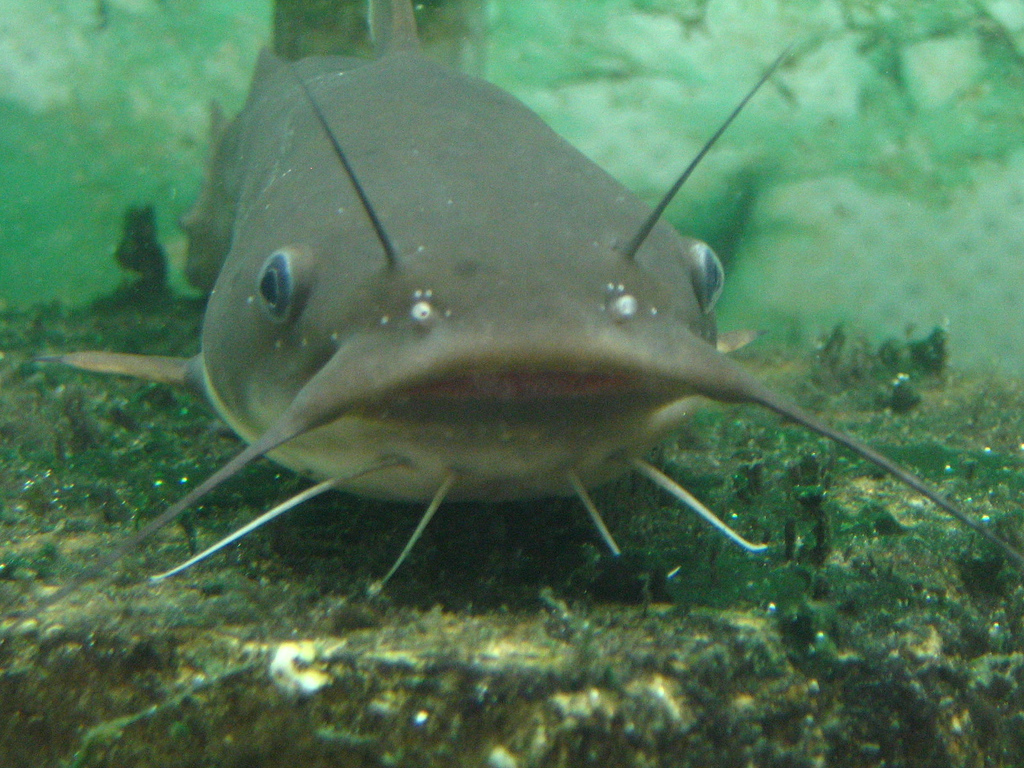
I've always been fond of fishing. From deep sea fishing in Alaska to scuba diving in Costa Rica, I've interacted with fish probably more than the average person should. I've read a fair amount on proper fishing methods, knots, baiting techniques, etc., and so I was a little shocked this past week when I discovered "catfish" is no longer an unequivocal term for the whiskered, bottom-dwelling freshwater fish I was accustomed to. After the critically-acclaimed 2010 documentary Catfish coined a new meaning for the animalMTV spun the idea of misleading virtual relationships to craft a reality-based TV show on the truths and lies of online dating. But how did the term "catfish" actually originate?
"They used to tank cod from Alaska all the way to China. They'd keep them in vats in the ship. By the time the codfish reached China, the flesh was mush and tasteless. So this guy came up with the idea that if you put these cods in these big vats, put some catfish in with them and the catfish will keep the cod agile. And there are those people who are catfish in life. And they keep you on you toes. They keep you guessing, they keep you thinking, they keep you fresh. And I thank God for the catfish because we would be droll, boring and dull if we didn't have somebody nipping at our fin." -from Catfish (courtesy of Wikipedia)
In its colloquial usage, a catfish is someone who pretends to be someone they are not using social media or the Internet. I don't think anyones willing to argue that these catfish don't exist. As the latter quote mentions, "catfish" keep us on our toes, forcing us to question the identities of others.  We've seen hundreds of these agile bottom-dwellers, we just never had a clever word for them.

One of the biggest catfish out there is Lance Armstrong. As he battled testicular cancer, Armstrong crafted an image of strength, determination, and most of all, success. When he entered the professional cycling scene, he raised his antes by winning his first Tour de France title. Once Armstrong's miracle story entered the main stream, in his mind he created an identity of a winner, a winner at all costs. All along, Armstrong denied claims of doping because his "catfish" identity hid who he truly was. Ironically, Armstrong is still reluctant to admit to his lies, even after being stripped of all seven Tour de France titles. In some ways, a big lie is like cancer itself. No one really knows how to deal with it the first time. But once its on the move, it destroys everything in its path. Often it isn't stopped until it's too late.

So yes kids, lying is bad. But it's out of our power to stop every single person on this Earth from lying. So what can we do? Well first, we need to understand what motivates these catfish to fabricate stories, and what better place to turn to than the Manti Te'O scandal. This shocking article entails the real Lennay Kukua's (Diane O'Meara) perspective on the scandal and how a stranger sucked her into elaborate lies embellished by social media. She was unknowingly "catfished," as I like to call it. Recently, Te'O admitted that after he found out his new girlfriend was imaginary, he kept the cancerous lie moving because he didn't really know what to do with it. The Notre Dame superstar thought he could continue living in his small pond of catfish. He claims that he didn't want to upset his dad, and he didn't want the media to think he was a liar or that he was clinically insane (so much for that).

But I think the real reason he kept living the lie transcends parental or societal disappointment. My guess is that Te'O, just like most of single America, spent unfathomable amounts of time on Facebook and Twitter hoping to find a connection, to find someone he could trust and share happiness with. I truly believe the right girl for Te'O is out there somewhere among the seven billion fish in the sea. But social media has the dangerous capability of giving us what we want, even if it's not really there. Te'O so desperately wanted love, that his idea of love thrived in the virtual world where he didn't have to physically face reality. Watch out, catfish are more real than you think.